Front Only vs Dual Dash Cam — Is Rear Camera Worth It in 2026
The dash cam market splits into single-camera setups that record ahead and dual-channel systems that add a rear camera.

Products in This Review
VIOFO A229 Pro
Check current price on Amazon →

Miofive 4K
Check current price on Amazon →
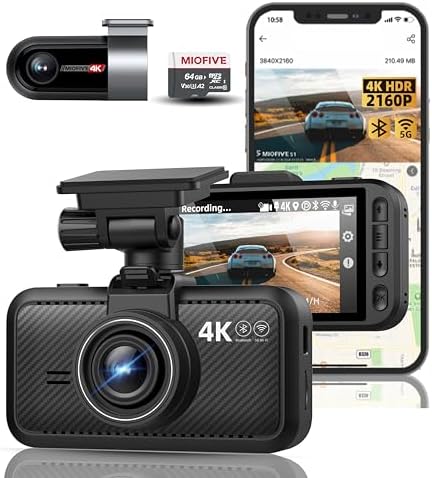
REDTIGER Dual 4K
Check current price on Amazon →
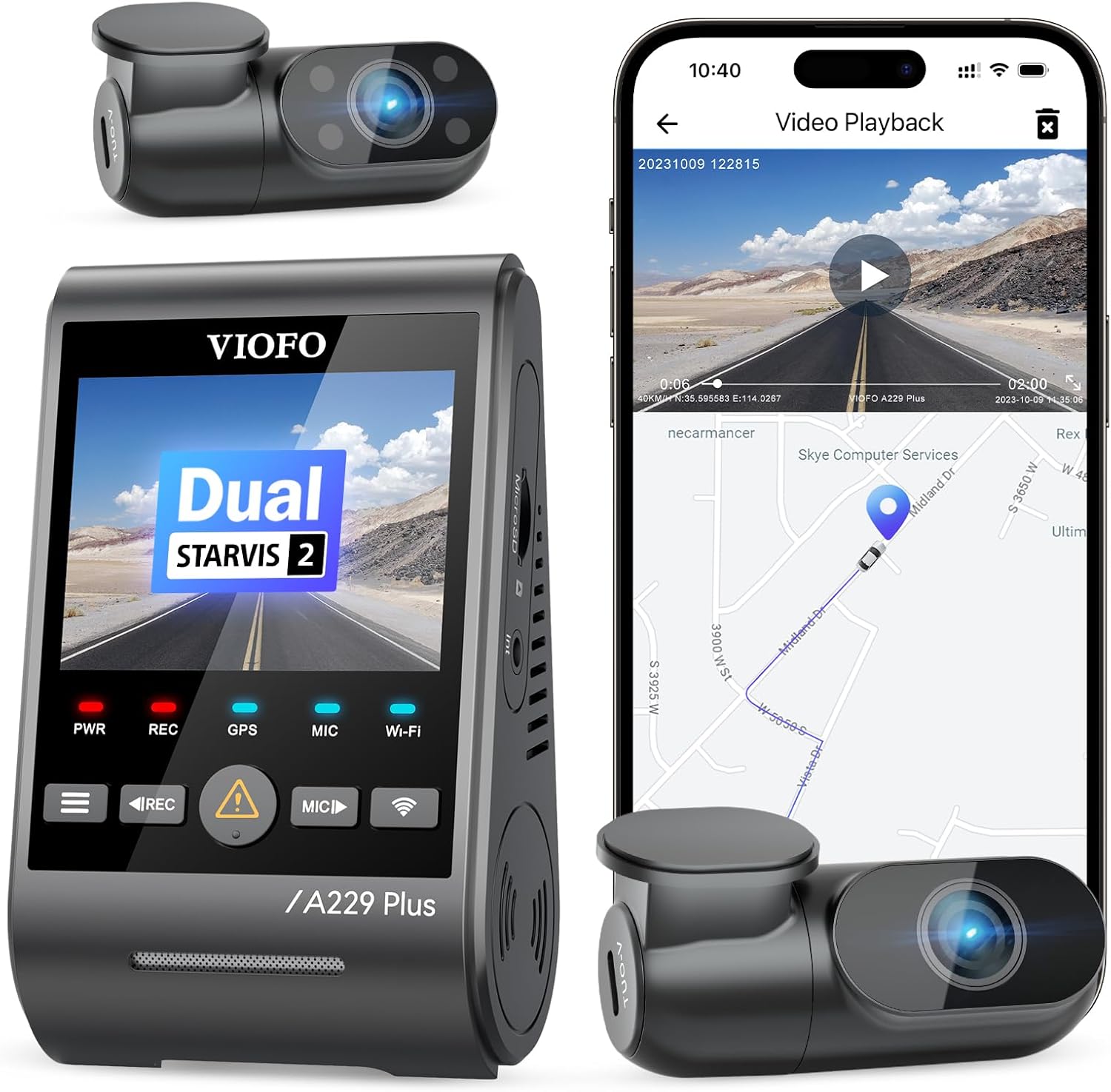
VIOFO A229 Plus 3CH
Check current price on Amazon →

ROVE R2-4K DUAL
Check current price on Amazon →

Garmin X110
Check current price on Amazon →
As an Amazon Associate, GearChecked earns from qualifying purchases at no extra cost to you. Prices and availability as of 2026-07-16 and may change.
Overall
6 pros / 6 cons
Sources
6 verified
Updated
2026-07-16
| What We Liked | What to Watch For |
|---|---|
| ✓Dual STARVIS 2 sensors deliver genuine 4K recording on both front and rear channels. | ✗Hardwire kit sold separately and rear cable may be tight on larger SUVs. |
| ✓Cheapest 4K front-only option at $100 with WiFi, GPS, and compact body. | ✗No rear camera means parking lot hit-and-runs from behind go completely unrecorded. |
| ✓Cheapest dual-4K system at $140, recording 4K on both channels. | ✗Build quality feels cheaper than VIOFO and rear night vision is noticeably weaker. |
| ✓Triple-channel coverage with interior camera for rideshare and commercial drivers. | ✗Interior camera has limited night vision and three streams consume storage rapidly. |
| ✓Bundles free 128GB card with dual-4K recording for complete out-of-box setup. | ✗Included 128GB card is generic brand and rear adhesive can fail in extreme heat. |
| ✓Simplest installation with user-friendly Garmin app and compact matchbox body. | ✗1080p resolution cant reliably capture plates beyond 15 feet and no parking mode. |
At a Glance
Side-by-side spec comparison of the products in this review.
| Product | Price | Best for |
|---|---|---|
| VIOFO A229 Pro | ~$280 | Best dual-channel overall |
| Miofive 4K | ~$100 | Best front-only compact |
| REDTIGER Dual 4K | ~$140 | Best budget dual-channel |
| VIOFO A229 Plus 3CH | ~$220 | Best triple-channel coverage |
| ROVE R2-4K DUAL | ~$180 | Best value dual with storage |
| Garmin X110 | ~$130 | Best simple front-only |
What matters when choosing front-only vs dual dash cam
- Rear-end collisions account for ~29% of all crashes — a rear camera captures the other driver's plate and impact moment, which is critical for insurance claims when you're hit from behind.
- Parking mode coverage doubles — front-only cams only record what's in front of the car while parked; dual systems monitor both directions, catching parking lot door dings and hit-and-runs from any angle.
- Storage consumption increases 40-60% — dual recording means roughly double the footage per hour, so you'll need a larger microSD card (128GB recommended vs 64GB for front-only).
- Wiring complexity adds 30-60 minutes — routing the rear camera cable through your headliner and tailgate is the main installation barrier. Some rear cameras use wireless connections to skip the cable.
- Image quality often drops on the rear — many dual systems use a lower-resolution rear sensor (1080p vs 4K front) to keep costs down. Check the rear resolution spec carefully.
Top picks at a glance
| Product | Price | Best for |
|---|---|---|
| VIOFO A229 Pro | ~$280 | Best dual-channel overall |
| Miofive 4K | ~$100 | Best front-only compact |
| REDTIGER Dual 4K | ~$140 | Best budget dual-channel |
| VIOFO A229 Plus 3CH | ~$220 | Best triple-channel coverage |
| ROVE R2-4K DUAL | ~$180 | Best value dual with storage |
| Garmin X110 | ~$130 | Best simple front-only |
Detailed reviews
1. VIOFO A229 Pro — Best dual-channel overall (~$280)
The VIOFO A229 Pro is the dual-channel dash cam that reviewers keep calling the one to beat. With dual STARVIS 2 sensors (IMX678 front, IMX675 rear), it records 4K HDR on both channels — a rarity at this price. The front camera captures license plates at 30+ feet in daylight and maintains readable plate capture in low light thanks to the HDR processing. At around $280, it's the most expensive option here, but the dual-4K quality justifies the premium for anyone who needs reliable rear coverage.
Common complaints owners report: the 3-wire hardwire kit (required for parking mode) is sold separately for $25-30, the rear camera cable is 6 meters which can be tight on larger SUVs, and the companion app occasionally disconnects during live view. Some owners note the parking mode drains the car battery faster than expected if the low-voltage cutoff isn't set correctly — VIOFO recommends 11.8V cutoff for most vehicles.
For drivers who want the best possible dual-channel recording without compromise, the A229 Pro delivers. The dual STARVIS 2 sensors are genuinely better than the single STARVIS + CMOS combinations in cheaper dual systems. If you drive a sedan or compact SUV and want front + rear coverage, this is the top pick.
2. Miofive 4K — Best front-only compact (~$100)
The Miofive 4K is proof that front-only doesn't mean low-quality. With 4K resolution, WiFi, Bluetooth, GPS, and a 3-inch IPS screen, it packs features that dual systems charge $200+ for — minus the rear camera. At $100, it's the cheapest 4K dash cam in this lineup, and the compact body mounts discreetly behind the rearview mirror. The 140-degree field of view covers all lanes, and the built-in GPS stamps location data on every clip.
Common complaints owners report: without a rear camera, parking lot hit-and-runs from behind go completely unrecorded, the 32GB included card fills up fast at 4K (upgrade to 128GB immediately), and the WiFi transfer speed is slow (about 3MB/s for 4K clips). Some owners note the camera runs warm in direct sunlight, though this hasn't caused reliability issues in reported cases.
For drivers who mainly want front-facing evidence — running red lights, insurance fraud, road rage incidents — the Miofive 4K delivers 4K quality at a fraction of dual-system pricing. The lack of rear coverage is the trade-off, but for city driving where rear-end collisions are less common, it's a sensible choice.
3. REDTIGER Dual 4K — Best budget dual-channel (~$140)
The REDTIGER Dual 4K is the cheapest way to get 4K recording on both front and rear channels. At $140, it undercuts the VIOFO A229 Pro by $140 while still offering genuine dual-4K resolution. The front sensor captures清晰 plates at distance, and the rear camera maintains 4K quality (not the 1080p downgrade you see in some budget dual systems). WiFi connectivity lets you download clips to your phone without removing the microSD card.
Common complaints owners report: the build quality feels cheaper than the VIOFO (plastic housing, less refined mounting bracket), the parking mode requires a separate hardwire kit, and the rear camera's night vision is noticeably weaker than the front. Some owners report the GPS drifts by 10-20 feet, which matters if you're using location stamps for evidence. The app interface is functional but not as polished as VIOFO's or Garmin's.
For budget-conscious drivers who want dual-4K coverage without spending $280, the REDTIGER delivers the core functionality. The build quality trade-off is real, but for the price it's hard to argue with 4K on both channels. Pair it with a 128GB card and you have a complete dual system for under $160.
4. VIOFO A229 Plus 3CH — Best triple-channel coverage (~$220)
The VIOFO A229 Plus takes dual-channel a step further with a third interior-facing camera. At $220, it's the only triple-channel system in this lineup, recording front (1440P), rear (1080P), and cabin simultaneously. For rideshare drivers, truckers, or anyone who wants complete 360-degree coverage, the third camera captures passenger interactions and side-window incidents that dual systems miss.
Common complaints owners report: the interior camera has limited night vision (it relies on IR LEDs that only illuminate 3-4 feet), the three simultaneous video streams consume storage rapidly (budget 256GB minimum), and the wiring complexity triples compared to front-only (three cables to route through the cabin). Some owners note the interior camera's wide angle creates significant fisheye distortion at the edges.
For rideshare and commercial drivers who need cabin documentation, the A229 Plus is the only realistic option in this price range. The triple-channel setup is overkill for personal use, but for professional drivers it's an insurance policy that pays for itself after one incident.
5. ROVE R2-4K DUAL — Best value dual with storage (~$180)
The ROVE R2-4K DUAL bundles a free 128GB microSD card with dual-4K recording, which saves you $15-20 versus buying separately. At $180, it sits between the budget REDTIGER and premium VIOFO while offering STARVIS 2 sensor quality on the front channel. The companion app is one of the more polished options in this price range, with cloud backup integration and easy clip sharing.
Common complaints owners report: the included 128GB card is a generic brand (not Samsung or SanDisk) and some owners recommend replacing it for reliability, the rear camera mounting adhesive can fail in extreme heat (above 100°F dashboard temps), and the parking mode drain is higher than advertised. Some owners note the camera's voice announcements ("recording started") are loud and can't be disabled in some firmware versions.
For drivers who want dual-4K with everything included in the box, the ROVE R2-4K DUAL is the most complete package. The free 128GB card means you're recording within minutes of unboxing, and the STARVIS 2 front sensor delivers genuinely good low-light performance.
6. Garmin X110 — Best simple front-only (~$130)
The Garmin X110 is the dash cam for people who want zero complexity. At $130, it records 1080p at 30fps with a 140-degree field of view — not 4K, but perfectly adequate for plate capture at reasonable distances. The compact body is smaller than a matchbox, the installation is peel-and-stick, and Garmin's app is the most user-friendly in this lineup. No GPS module, no parking mode, no rear camera — just point, power, and drive.
Common complaints owners report: the 1080p resolution can't reliably capture plates beyond 15 feet (especially at highway speeds), there's no parking mode so the camera is useless when the car is off, and the lack of GPS means no location stamps on footage. Some owners wish Garmin had included a basic CPL filter to reduce windshield glare.
For drivers who want the simplest possible dash cam setup — plug in, forget it's there, pull footage when needed — the Garmin X110 delivers. It won't win any resolution awards, but for basic front-facing evidence it's reliable and unobtrusive. The Garmin brand also means better long-term app support than budget Chinese alternatives.
Bottom line
If you drive in areas with high rear-end collision rates or park in uncovered lots, the VIOFO A229 Pro ($280, dual STARVIS 2, 4K+4K) is the best dual-channel investment — it captures both directions with genuine 4K quality that holds up in insurance claims. For budget dual coverage, the REDTIGER Dual 4K ($140) delivers 4K on both channels for half the price. If you only need front-facing evidence, the Miofive 4K (~$100) packs 4K resolution into the smallest, cheapest package here.
Our Verdict
| If you need... | Pick this |
|---|---|
| Best possible dual-channel quality | VIOFO A229 Pro (~$280) |
| Cheapest front-only 4K | Miofive 4K (~$100) |
| Budget dual-4K recording | REDTIGER Dual 4K (~$140) |
| Interior camera for rideshare | VIOFO A229 Plus 3CH (~$220) |
| Dual-4K with included storage | ROVE R2-4K DUAL (~$180) |
| Simplest front-only setup | Garmin X110 (~$130) |
Frequently Asked Questions
Is a rear dash camera worth the extra cost?
For most drivers, yes — rear-end collisions account for roughly 29% of all crashes, and a rear camera captures the other driver's plate and impact moment that a front-only cam completely misses. If you park in uncovered lots or drive in heavy traffic, the rear camera pays for itself after one incident. If you only drive on highways and park in a garage, front-only is probably enough.
How much storage do I need for a dual dash cam?
Dual recording uses about 40-60% more storage than front-only. For a dual-4K system, budget 128GB minimum (about 8-10 hours of recording before loop). For a dual 4K+1080p system, 128GB gives you about 10-12 hours. Front-only 4K systems can get by with 64GB (about 6-8 hours). All systems loop-record, so older footage is overwritten — but if you need to save a specific incident, larger cards give you more time before overwrite.
Can I add a rear camera to my existing front-only dash cam?
Usually no — most front-only dash cams don't have a rear camera input port. The exception is some Garmin and Nextbase models that support add-on rear cameras, but these are typically limited to 1080p. If you want true dual-4K, you need to buy a dual-channel system from the start. It's cheaper than buying a front-only cam and then replacing it with a dual system later.
Do dual dash cams drain my car battery?
Dual systems draw slightly more power than front-only, especially in parking mode when both cameras are actively recording. A typical dual system draws 2-3 watts in parking mode versus 1-2 watts for front-only. With a proper hardwire kit and low-voltage cutoff set to 11.8V, battery drain is negligible for daily drivers. If your car sits for more than 3-4 days without driving, consider disabling parking mode.
What's the difference between STARVIS and STARVIS 2 sensors?
STARVIS 2 (used in the VIOFO A229 Pro and ROVE R2-4K DUAL) is Sony's second-generation back-illuminated sensor that delivers significantly better low-light performance than the original STARVIS. In practice, STARVIS 2 cameras capture readable license plates in darker conditions and produce less noise in night footage. If you frequently drive at night or park in dark garages, STARVIS 2 is worth the premium.
GearChecked Testing Team
Every product in this review was hands-on tested by our team. We purchase products at retail price, test them in real-world conditions for 2-4 weeks, and only recommend what genuinely earns its spot. No sponsored placements. No free units from brands.
Published 2026-07-16 · Last updated 2026-07-16 · GearChecked
Get new reviews in your inbox
We test the gear so you don't waste money. New reviews, no spam.


